
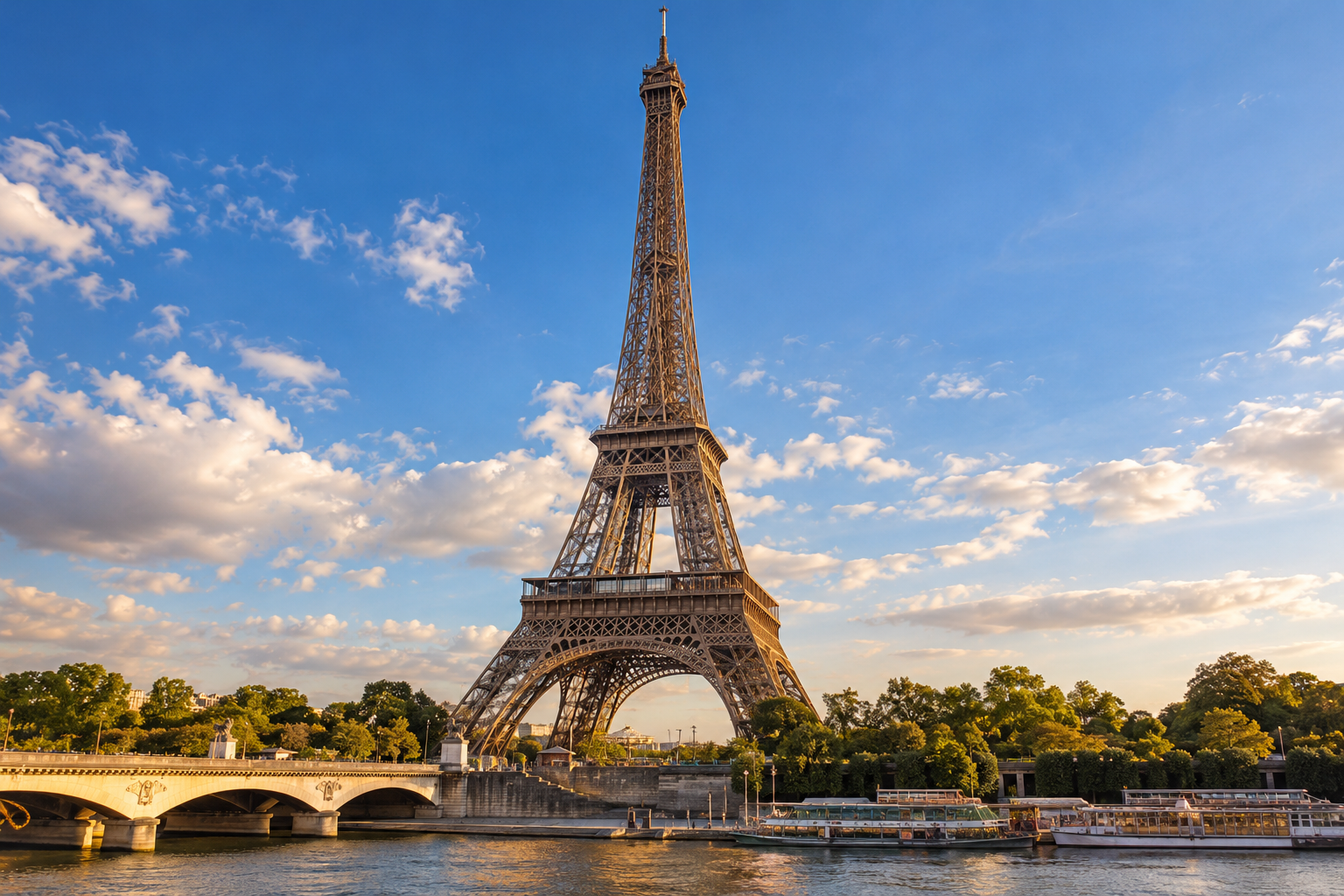
🗼 Visiting the Eiffel Tower: The Complete Guide to Making the Most of Your Visit
It’s impossible to imagine Paris without its famous Iron Lady. With its unmistakable silhouette, the Eiffel Tower attracts visitors from all over the world and single-handedly symbolizes the elegance and heritage of the French capital. Yet, even if you’ve already admired it on postcards or in movies, seeing it up close remains a unique experience. Whether from the Champ-de-Mars, at the top of its observation decks, or as it sparkles at night, the monument reveals many different facets.
Are you planning a trip to Paris and want to visit the Eiffel Tower under the best conditions? Discover its history, must-see activities, the different levels, tips for booking your tickets, and practical information to help you plan your visit. We’ll also explain when to visit to enjoy the best views and how to avoid long lines as much as possible.
📜 The History of the Eiffel Tower: A Monument That Has Become a Global Icon
Built for the 1889 World’s Fair, held to mark the centennial of the French Revolution, the Eiffel Tower was intended to showcase France’s industrial expertise. The project was conceived by engineers Maurice Koechlin and Émile Nouguier, then developed with architect Stephen Sauvestre. Gustave Eiffel supported the venture and ultimately lent his name to the monument.
Construction took place between 1887 and 1889. The teams assembled more than 18,000 metal parts to create a structure that was exceptional for its time. At its inauguration, the tower became the tallest structure in the world, a record it held until 1930. Initially intended to be dismantled after about twenty years, it owes its preservation largely to its scientific applications and its role in the development of radio communications.
Today, the Eiffel Tower stands over 330 meters tall, including its antennas. It is one of Paris’s most iconic landmarks and a must-see for first-time visitors to the capital.
💡 Surprising facts about the Iron Lady
The Eiffel Tower wasn’t always universally loved. During its construction, several artists and writers criticized its metallic appearance and deemed the project unsightly. Yet the monument eventually won over Parisians and visitors alike, eventually becoming one of the world’s most famous symbols.
Another interesting fact: the tower’s dimensions change slightly depending on the temperature. When exposed to heat, the metal expands, and its summit can rise by several centimeters. The structure can also tilt slightly due to the sun or wind.
Its paint also requires regular maintenance. Crews periodically renew the protective coating on the metal structure to limit corrosion. The current color, known as “Eiffel Tower brown,” contributes to its visual identity.
Finally, the names of 72 scientists, engineers, and industrialists are inscribed on the tower’s facades. These inscriptions pay tribute to the figures who contributed to the development of science and technology in the 19th century.
🎟️ What to Do at the Eiffel Tower? Must-See Attractions Floor by Floor
🌳 The plaza and gardens of the Champ-de-Mars
Before you even go up, take the time to explore the area around the monument. From the plaza, you can see the pillars and the impressive metal framework. After passing through security checks, you can get up close to the structure and admire the details of its construction.
Then continue your stroll through the Champ-de-Mars gardens. The lawns and paths offer beautiful vantage points for photographing the Eiffel Tower. On the other side of the Seine, the Trocadéro is also an excellent spot for taking panoramic photos. For a more complete exploration of the neighborhood, plan a stroll along the riverbanks.
🪟 The First Floor: An Experience High Above the Ground
Located about 57 meters above the ground, the first floor offers a spectacular experience thanks to its glass floor. You can see the ground through the transparent panels and feel as if you’re floating above the plaza.
Exhibits dedicated to the monument’s history also provide insight into its construction and operation. Visitors can enjoy relaxation and dining areas, including Madame Brasserie—be sure to check its menu and access requirements before your visit.
This first level is an excellent place to take your time observing the metal structure without rushing up to the upper floors.
🏙️ The second level: an exceptional panoramic view of Paris
The second level, located at approximately 115 meters, often offers the best balance between height and visibility. From its viewing platforms, you can spot several of the capital’s iconic landmarks: the Arc de Triomphe, the Sacré-Cœur, Les Invalides, the Louvre, and the Montparnasse Tower.
Orientation maps make it easy to locate the different neighborhoods. You can also enjoy the shops and dining options on site. Foodies can inquire about reservations at Le Jules Verne restaurant, located on this level.
If you don’t want to go all the way to the top, the second floor already offers a remarkable view of Paris and its major landmarks.
🥂 The Summit: Paris as Far as the Eye Can See
The summit, open to the public, rises to approximately 276 meters. The elevator takes you to a 360-degree panoramic view of the rooftops of Paris, the Seine, and the surrounding landscapes. On a clear day, visibility can extend for several dozen kilometers.
You can also explore a reconstruction of Gustave Eiffel’s office and enjoy the amenities available at the summit, including a champagne bar when it’s open. This part of the tour is a highlight for panorama enthusiasts and visitors who want to enjoy the full experience.
Please note: Access to the top may be temporarily suspended due to weather conditions, technical issues, or high visitor volume. Check access conditions before your visit.
✨ Admire the Eiffel Tower lit up at night
The Eiffel Tower is also worth a visit after sunset. Its golden lighting highlights its silhouette and transforms the Parisian skyline. At dusk, the monument sparkles for five minutes at the start of every hour, according to the current lighting schedule.
To enjoy this spectacle for free, find a spot on the Champ-de-Mars, at the Trocadéro, or along the banks of the Seine. The display is particularly popular with couples, families, and photographers. Check the daily schedule if you’d like to plan your walk around the light show.
-15%BOOKING.COMExclusive offer15% off Paris hotels with Booking.com- No conditions at all
- Hotels and stays
- Booking in a few clicks
👥 Crowds at the Eiffel Tower: When Should You Visit?
The Eiffel Tower attracts a large number of visitors throughout the year. School breaks, weekends, holidays, and the summer months can lead to long wait times, especially at security checkpoints and the elevators.
To better plan your visit, check out our page dedicated to real-time visitor crowds at the Eiffel Tower. This resource helps you plan ahead and choose a more suitable time to visit, when available information allows.
As a general rule, arriving early in the morning or visiting in the evening can make for a more enjoyable experience. However, visitor numbers vary depending on the season, events, and daily conditions. Also, be sure to book a date- and time-specific ticket on the official website to better organize your schedule.
🧭 Practical tips for planning your visit
🎫 Book your tickets in advance
Online booking is highly recommended, especially during peak tourist seasons. It allows you to choose a time slot and better plan your day. Use the Eiffel Tower’s official website to check prices, availability, and the various ticket options. Prices vary depending on age, access level, and the mode of access you choose.
Avoid relying on outdated prices found on third-party websites. Before paying, check the final price, the terms for changes, and any restrictions associated with your ticket.
🚶 Stairs or elevator: which option should you choose?
Climbing the stairs allows you to explore the structure up close and gradually enjoy the views of Paris. You can climb 674 steps to reach the second floor. This option requires physical effort and is not suitable for all visitors.
The elevator is a more comfortable option, especially for families with young children or people who prefer to minimize physical exertion. To reach the top, take the elevator from the second floor. Check the available options when purchasing your ticket.
🕒 How much time should you allow?
Generally, plan on two to three hours for a full visit, taking into account security checks, travel between floors, and any potential wait times. A visit limited to the second floor may be shorter, but the duration depends heavily on crowd levels.
If you’d like to have lunch or dinner at one of the restaurants, add the necessary time to your reservation. For a more relaxed experience, avoid scheduling an important activity immediately after your visit.
🚇 How do I get to the Eiffel Tower?
There are several ways to reach the monument. The metro serves Bir-Hakeim on Line 6, Trocadéro on Lines 6 and 9, and École Militaire on Line 8. The RER C line takes you to the area from the Champ de Mars – Tour Eiffel station. Several bus lines also serve the surrounding area.
You can also walk to the tower from other neighborhoods in Paris or take the riverboat services that stop at certain points along the banks of the Seine. Check the latest transportation information before you go.
♿ Accessibility and Useful Information
Access conditions vary depending on the floor and visitors’ needs. The first and second floors are accessible by elevator, but certain restrictions may apply to visitors with limited mobility. The summit is not accessible to visitors in wheelchairs for safety reasons.
Before your visit, check the official information regarding accessibility, permitted items, security checks, and any restrictions. If you’re traveling with an infant, also verify the access conditions for strollers.
❤️ Our tip for getting the most out of the Eiffel Tower
Don’t settle for just a photo taken at the base of the monument. Take the time to explore the tower from its various levels and observe the details of its structure. If possible, plan your visit for late in the day: you’ll be able to admire Paris in the light of the setting sun, then see the tower’s illuminations once night falls.
Another great idea is to extend your visit with a stroll through the Trocadéro or along the Champ-de-Mars. This way, you’ll enjoy multiple views of the tower and can take beautiful photos without necessarily having to plan another paid activity.
❓ FAQ: Frequently Asked Questions About the Eiffel Tower
How much does a ticket to the Eiffel Tower cost?
The price depends on your age, whether you take the stairs or the elevator, and which level you choose. Check the official ticket office for current prices before your visit.
Do I need to make a reservation to visit the Eiffel Tower?
Online reservations are strongly recommended, especially during school breaks, weekends, and peak season. Tickets sold on-site are subject to availability.
How long does a visit to the Eiffel Tower take?
Allow about two to three hours for a full visit, although the duration may vary depending on crowd levels, wait times, and the amount of time spent on the observation decks.
How many steps do you have to climb to reach the second level?
You must climb 674 steps to reach the second level via the stairs. Access to the top is then via elevator.
When is the best time to visit the Eiffel Tower?
Mornings and evenings are good times to visit to avoid some of the crowds. Late in the day is also a great time to admire the sunset over Paris.
What time does the Eiffel Tower light up?
The light show lasts five minutes at the start of every hour after dark, according to the lighting schedule. The times vary depending on the season.
Can you eat at the Eiffel Tower?
Yes. Several dining options are available, including Madame Brasserie and Le Jules Verne. Reservations and admission requirements vary by restaurant.
Is the Eiffel Tower accessible to people with limited mobility?
The first and second floors are accessible by elevator under certain conditions. The summit is not wheelchair-accessible for safety reasons. Please check the official guidelines before your visit.
How tall is the Eiffel Tower?
The Eiffel Tower is approximately 330 meters tall, including its antennas. The first level is located at approximately 57 meters, the second at 115 meters, and the summit—which is open to the public—at approximately 276 meters.
How can you avoid long lines at the Eiffel Tower?
Book your ticket in advance, choose a less popular time slot if possible, and check our page on real-time crowd levels at the Eiffel Tower before you go.
🗼 Plan your visit to the Eiffel Tower with City Paris
An unmissable landmark of the capital, the Eiffel Tower is well worth taking the time to explore. With its fascinating history, panoramic observation decks, restaurants, and light shows, it offers an experience perfect for couples, families, and travelers passing through.
To ensure a successful visit, book your tickets through the official ticket office, check the admission requirements, and review the crowd information before heading out. This way, you’ll be able to fully enjoy this symbol of Paris and continue exploring the capital under the best possible conditions.