
🗼 How to Spend One Day in Paris: The Perfect Itinerary for First-Time Visitors
🗼 One Day in Paris: The Ultimate First-Time Visitor’s Guide
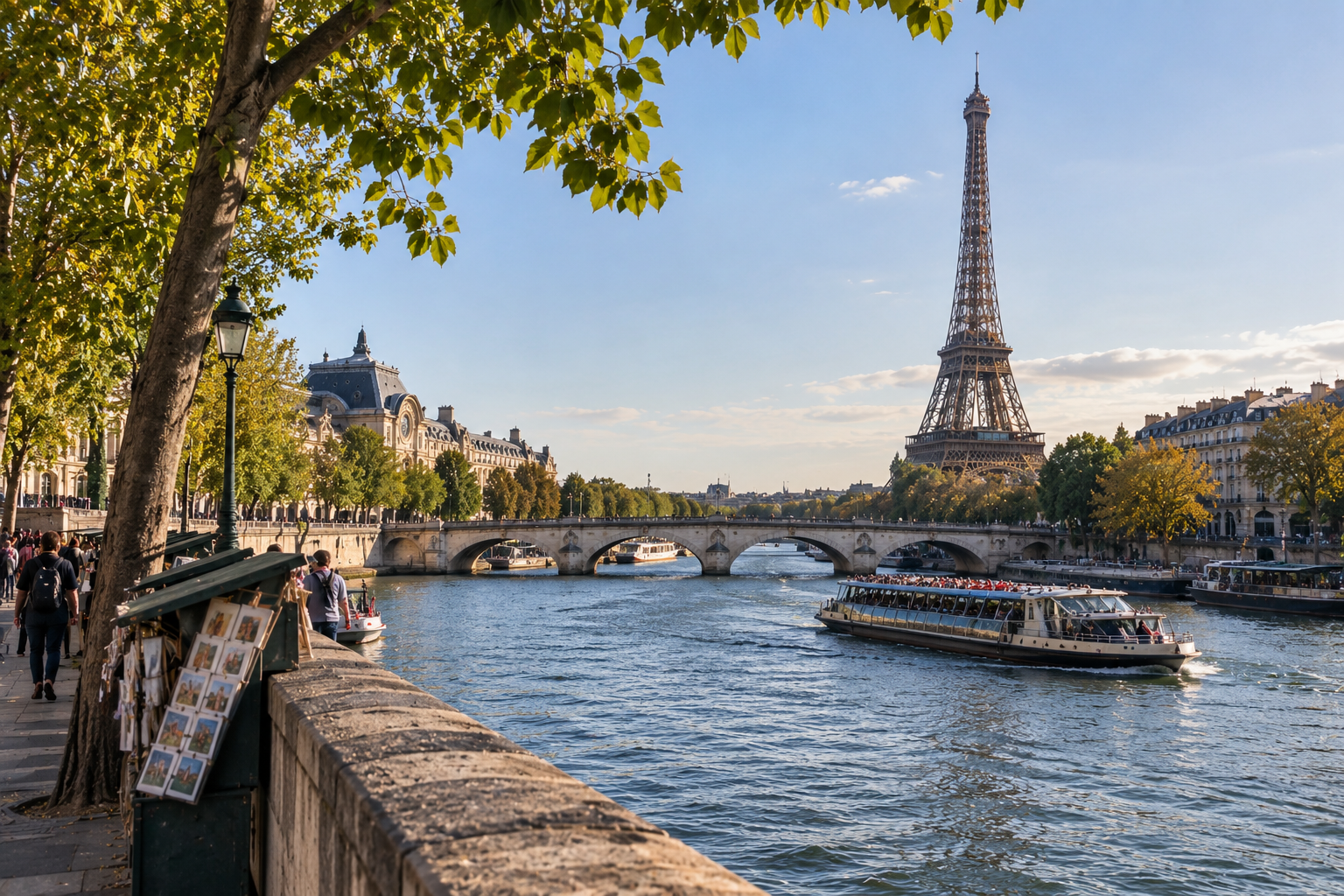
Paris is one of the most captivating cities in the world, combining historic monuments, elegant boulevards, world-famous museums and charming neighbourhoods. You may already recognise the Eiffel Tower, the Louvre Pyramid and the Seine from photographs, but experiencing these landmarks in person is something entirely different. If you are visiting the French capital for the first time, planning your day carefully will help you discover its highlights without spending every moment rushing between attractions.
Although one day is not enough to explore everything Paris has to offer, a well-organised itinerary can introduce you to its most famous sights and distinctive atmosphere. From the medieval heart of the city to the magnificent Eiffel Tower, this guide explains what to see, how to get around and where to take a break. Follow these practical tips to make the most of your first day in Paris while leaving enough time to enjoy a coffee, take photographs and discover the city at your own pace.
🏛️ 1. Start Your Day on Île de la Cité
Begin your Paris itinerary on Île de la Cité, the historic island in the Seine where the city developed over many centuries. Arriving early allows you to enjoy a quieter atmosphere, admire the architecture in the morning light and explore the surrounding streets before the largest crowds arrive. This central location also makes it an excellent starting point for a walking tour through some of the capital’s most important historic districts.
⛪ Discover Notre-Dame Cathedral
Notre-Dame Cathedral is one of the most recognisable monuments in France. Its Gothic architecture, sculpted portals, flying buttresses and impressive towers make it an essential stop for first-time visitors. After the devastating fire of April 2019, the cathedral underwent extensive restoration and reopened to visitors in December 2024, allowing people to rediscover this remarkable landmark.
Take time to admire the cathedral’s exterior and the square in front of its main entrance. If you want to visit inside, check the official visitor information and reservation arrangements before travelling, as access conditions can change. Depending on availability and your interests, you may also want to explore Sainte-Chapelle, another remarkable monument on the island, famous for its magnificent medieval stained-glass windows.
🌉 Walk Across Pont Neuf
Continue towards Pont Neuf, one of the oldest surviving bridges across the Seine in Paris. Despite its name, which means New Bridge, construction began in the late sixteenth century and the bridge opened in the early seventeenth century. Its stone arches, riverside views and position near the western end of Île de la Cité make it a wonderful place to take photographs.
From here, follow the river towards the Louvre. This pleasant walk introduces you to the historic façades of central Paris, riverside bookstalls and elegant bridges. It also provides an opportunity to appreciate the Seine, which has shaped the city’s history, transport and urban landscape for centuries.
🎨 2. Explore the Louvre and the Tuileries Garden
The Louvre is one of the world’s most famous museums and a highlight of any visit to Paris. Its vast collections cover thousands of years of art and history, from ancient Egyptian objects and classical sculpture to European paintings and decorative arts. The glass pyramid in the central courtyard has become one of the city’s most recognisable contemporary landmarks, contrasting beautifully with the historic palace surrounding it.
🖼️ Choose Your Louvre Highlights
Exploring the entire Louvre in a single morning is unrealistic, so plan your visit around a few priorities. Popular highlights include Leonardo da Vinci’s Mona Lisa, the Winged Victory of Samothrace and the Venus de Milo. The museum also contains exceptional collections of French painting, Italian Renaissance art and ancient civilisations.
Allow approximately 90 minutes to two hours for a focused visit, although even this may feel short during busy periods. Book your admission in advance, check the museum’s opening days and consult the official floor plan to identify the galleries you most want to see. If museums are not your priority, you can admire the Louvre’s exterior and courtyard before continuing towards the gardens.
🌳 Relax in the Tuileries Garden
After the museum, take a break in the Tuileries Garden, one of the most beautiful historic green spaces in central Paris. Located between the Louvre and Place de la Concorde, the garden features tree-lined paths, ornamental ponds, sculptures and comfortable chairs around its fountains. It offers a welcome change of pace after exploring the museum’s galleries.
The garden is particularly enjoyable during spring and summer, when flowers and greenery bring colour to the landscape. It is also a convenient place to pause for a snack, enjoy a coffee nearby or take photographs of the surrounding architecture. If the weather is pleasant, spend at least 20 to 30 minutes here before heading towards the next landmark.
🥐 3. Enjoy Lunch Near Place de la Concorde
By lunchtime, make your way towards Place de la Concorde, the monumental square at the western end of the Tuileries Garden. Its Egyptian obelisk, decorative fountains and impressive perspectives make it one of the most distinctive public spaces in Paris. From here, you can look towards the Champs-Élysées on one side and the Tuileries and Louvre on the other.
The surrounding neighbourhood offers cafés, bakeries, traditional French brasseries and restaurants serving international cuisine. For a quick and convenient lunch, consider a freshly prepared sandwich, a savoury crêpe or a light meal at a café. If you prefer a longer restaurant experience, make a reservation and allow enough time to enjoy your meal without compromising the rest of your itinerary.
Keep your lunch relatively flexible, particularly if you plan to visit the Eiffel Tower later in the afternoon. Paris is a city best experienced at a comfortable pace, and a short break can make the difference between an enjoyable day and an exhausting checklist of attractions.
🗼 4. Visit the Eiffel Tower in the Afternoon
No first trip to Paris feels complete without seeing the Eiffel Tower. Designed by engineer Gustave Eiffel’s company for the 1889 World’s Fair, this iconic structure has become one of the most recognised monuments in the world. Standing approximately 330 metres tall, including its antennas, it dominates the skyline and offers spectacular views across the French capital.
📸 Find the Best Views of the Eiffel Tower
Start at the Trocadéro, where the elevated terraces provide a famous panoramic view across the Seine towards the tower. This is one of the best locations for wide-angle photographs, particularly when the weather is clear. Walk down towards the river, cross Pont d’Iéna and continue towards the Champ de Mars to experience the monument from different perspectives.
The Champ de Mars provides a spacious green setting with excellent views of the tower rising above the surrounding landscape. You can sit on a bench, enjoy a short break or simply watch the activity around one of Paris’s most popular attractions. Allow time for photographs rather than immediately moving on to the next destination.
🎟️ Should You Go Up the Eiffel Tower?
If you want to visit the observation levels, book your ticket in advance through the official Eiffel Tower website. Prices depend on the access level, whether you take the stairs or the lift, and your age category. You should also allow extra time for security checks and possible queues, particularly during weekends and school holidays.
If tickets are unavailable or your schedule is tight, viewing the tower from the Trocadéro and Champ de Mars is still a memorable experience. The surrounding area offers numerous opportunities to appreciate the monument without committing to a lengthy visit. Check the official opening information before travelling, especially if you intend to go to the summit.
-15%BOOKING.COMExclusive offer15% off Paris hotels with Booking.com- No conditions at all
- Hotels and stays
- Booking in a few clicks
🏙️ 5. Continue to the Arc de Triomphe and the Champs-Élysées
From the Eiffel Tower, continue towards the Arc de Triomphe, which stands at the western end of the Champs-Élysées. You can walk towards the monument if you have enough time, or use the metro to reduce the distance. The journey provides a transition from the open spaces around the Eiffel Tower to one of Paris’s grandest urban avenues.
Commissioned by Napoleon Bonaparte in 1806, the Arc de Triomphe commemorates those who fought and died for France. Its sculpted reliefs and inscriptions reflect important moments in French military history. Beneath the monument lies the Tomb of the Unknown Soldier, where an eternal flame honours those who died during the First World War.
🌇 Enjoy a Panoramic View of Paris
If time permits, climb to the rooftop observation terrace for a remarkable view of the city’s radial avenues. From above, you can see the Champs-Élysées stretching towards Place de la Concorde, with the Eiffel Tower and other Parisian landmarks visible in the distance. The climb involves stairs, so consider your fitness level and check accessibility information before booking.
If you prefer to remain at street level, enjoy a short walk along the Champs-Élysées instead. The avenue is lined with shops, cafés, restaurants and cinemas, although prices and crowds can be higher than in less central neighbourhoods. You do not need to spend long here to appreciate its scale and place in Parisian life.
🌅 6. Finish Your Day in Montmartre or Along the Seine
For the final part of your itinerary, choose between the artistic atmosphere of Montmartre and a relaxing evening beside the Seine. Both offer a memorable end to a first day in Paris, but they provide different experiences. Your choice will depend on how much energy you have left, where you plan to have dinner and whether you prefer hilltop views or riverside scenery.
🎨 Discover the Charm of Montmartre
Montmartre is famous for its winding streets, artistic heritage, independent cafés and views over the rooftops of Paris. Once home to artists such as Pablo Picasso and Vincent van Gogh, the neighbourhood retains a distinctive atmosphere that contrasts with the grand boulevards of central Paris. Its small squares, staircases and traditional streets are particularly appealing to visitors who enjoy exploring on foot.
The Basilica of Sacré-Cœur stands at the top of the hill and offers an impressive view across the city. You can explore the surrounding streets, discover Place du Tertre and stop at a café for dinner. Montmartre can be busy around the main tourist attractions, so venture a little further from the busiest squares if you want a quieter experience.
🚤 Take an Evening Walk or Seine Cruise
If you would rather avoid another uphill walk, finish your day beside the Seine. The riverbanks provide beautiful views of historic bridges, grand buildings and monuments illuminated after sunset. The area around Pont Alexandre III is especially attractive, with ornate lamps, sculptural details and views towards the Eiffel Tower.
An evening sightseeing cruise is another option for visitors who want to see several landmarks without walking further. Depending on the route, you may pass Notre-Dame, the Louvre, the Musée d’Orsay and the Eiffel Tower from the water. Compare departure points, durations and departure times before booking, and remember that the experience may vary according to weather and seasonal daylight.
🚌 How to Get Around Paris in One Day
Paris has an extensive public transport network, and the metro is particularly useful when travelling between distant neighbourhoods. Walking remains one of the best ways to explore the historic centre because it allows you to discover architectural details, small streets and unexpected views. A combination of walking and public transport is usually the most practical solution for a one-day itinerary.
Before leaving each attraction, check the distance to your next stop and consider how much time you have available. Some metro stations have long corridors or several exits, so journeys can take longer than expected. Check current service information and ticket conditions before travelling, particularly if engineering works affect your route.
For visitors who prefer a simpler overview of the main monuments, a hop on hop off Paris tour can be a practical option, particularly on a first visit. Tootbus offers Paris sightseeing routes with one-, two- and three-day passes, as well as options that combine the bus with walking tours, a Seine cruise or an evening experience. It is not the only way to explore the city, but it can reduce the amount of route planning and make it easier to see several well-known areas in a limited amount of time.
For a more personalised journey between attractions, use our practical Paris metro itinerary calculator to help plan your route around the city.
🎒 Practical Tips for Your First Day in Paris
- 🎟️ Book ahead: reserve timed-entry tickets for major attractions such as the Louvre and the Eiffel Tower whenever possible.
- 👟 Wear comfortable shoes: even with public transport, you will probably walk several kilometres throughout the day.
- ⏰ Start early: an early start gives you more time at popular landmarks and helps you avoid some of the busiest periods.
- 🥐 Plan flexible meal breaks: choose cafés and bakeries near your route to avoid spending too much time travelling for lunch.
- 📱 Check transport updates: look for metro disruptions, altered services and current ticket rules before setting off.
- 👜 Protect your belongings: remain attentive in crowded tourist areas, on public transport and around major stations.
- 🌦️ Check the weather: bring suitable clothing and adjust outdoor activities if rain or extreme temperatures are forecast.
- 🗓️ Avoid overplanning: choose a few essential attractions and leave room for spontaneous discoveries.
❓ FAQ: Planning One Day in Paris
🗼 Can you see Paris in one day?
You can discover several of Paris’s most famous landmarks in one day, including Notre-Dame, the Louvre area, the Eiffel Tower and the Arc de Triomphe. However, you will not have enough time to explore every neighbourhood or museum in depth. Choose your priorities and leave enough time for transport, meals and breaks.
🗺️ What is the best itinerary for a first visit to Paris?
A practical route starts on Île de la Cité, continues towards the Louvre and the Tuileries Garden, then heads to the Eiffel Tower and the Arc de Triomphe. Finish with Montmartre or an evening walk beside the Seine, depending on your interests and available time.
🎟️ Should I book Paris attractions in advance?
Yes, advance booking is recommended for popular attractions, especially the Eiffel Tower, the Louvre and Sainte-Chapelle. Timed tickets can help you organise your schedule, although you should still allow time for security checks and queues.
🚇 Is the metro the best way to travel around Paris?
The metro is one of the fastest ways to travel between neighbourhoods, while walking is ideal for exploring central Paris. Combining both options usually provides the best balance between efficiency and discovering the city at street level. A hop-on hop-off sightseeing bus is another option if you prefer to visit major landmarks with fewer transport changes.
🚌 Is a hop-on hop-off bus tour worth it in Paris?
A hop-on hop-off bus tour can be particularly useful for first-time visitors who want an overview of Paris’s main attractions. Depending on the route and ticket selected, you can get off near major landmarks and continue sightseeing at your own pace. Compare the available passes, routes and included experiences before booking.
💶 How much money do you need for one day in Paris?
Your budget depends on your choice of attractions, restaurants and transport. A day focused on walking and free outdoor sights can cost relatively little, while museum tickets, Eiffel Tower admission, guided tours and restaurant meals increase the total. Check current prices before travelling and reserve the attractions that matter most to you.
📸 Where can you take the best photos in Paris?
The Trocadéro offers one of the classic views of the Eiffel Tower, while Pont Neuf provides attractive views along the Seine. The Louvre Pyramid, the Arc de Triomphe rooftop and the steps of Sacré-Cœur are also excellent locations for photographs, depending on the weather and time of day.
🌙 What should you do in Paris in the evening?
You can explore Montmartre, enjoy dinner in a traditional restaurant or take a walk along the Seine. An evening river cruise is another popular option, especially if you want to admire illuminated monuments without adding too much walking to an already busy day.
✨ Make the Most of Your First Day in Paris
A single day in Paris can provide a memorable introduction to the French capital if you focus on a manageable number of landmarks. Notre-Dame and Île de la Cité reveal the city’s medieval history, the Louvre and Tuileries Garden showcase its artistic and royal heritage, and the Eiffel Tower and Arc de Triomphe offer unforgettable views of the city.
Finish with the artistic streets of Montmartre or the peaceful atmosphere of the Seine at sunset. If you prefer to cover several major landmarks with less transport planning, consider a hop-on hop-off sightseeing bus alongside walking and the metro. Most importantly, leave space in your schedule to stop, look around and enjoy the experience. Paris is not a city to be completed in a day; it is a destination that rewards curiosity and invites you to return.