
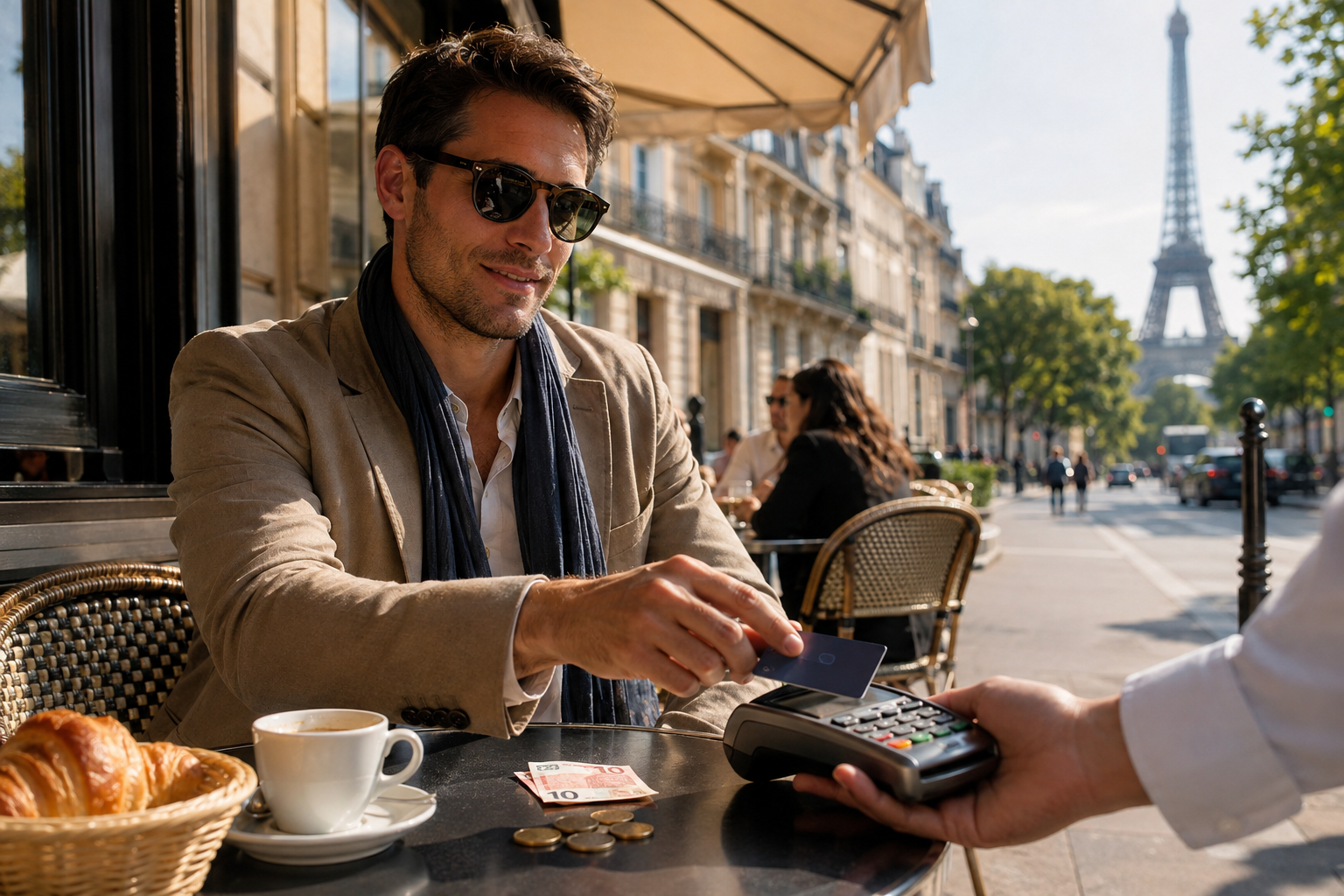
💳 Do You Need Cash in Paris?
A Practical Guide for American Visitors
Paris has become much easier to visit without carrying a large amount of cash. In most cafés, restaurants, museums, shops and hotels, you can pay by card in a few seconds. Contactless payment is now part of daily life. Apple Pay and Google Pay also work very well. Therefore, many American tourists spend several days in Paris without using a single banknote.
However, cash still has a place in your wallet. A few small businesses set minimum card payments. Some markets, public toilets, tips and unexpected situations can also be easier to handle with euros. The best strategy is simple: use your card for almost everything, but keep a small amount of cash as a backup.
This guide explains when you need cash in Paris, how much to bring, where to withdraw euros, how tipping works and how to avoid unnecessary bank fees. You can then enjoy the city with less stress and more confidence.
💶 Can You Pay by Card Almost Everywhere in Paris?
Yes, you can pay by card almost everywhere in Paris. Visa and Mastercard work in nearly all tourist locations. You can use them in supermarkets, bakeries, museums, department stores, restaurants, pharmacies, taxis and most attractions. Contactless payment also makes small purchases quick and easy.
For example, you can buy a croissant, reserve a table, pay for a river cruise or enter a museum with a card. You can also use a contactless card or mobile wallet on public transport terminals, although the exact payment method depends on the ticket option you choose.
American Express works in many hotels, larger restaurants and famous stores. However, smaller cafés and independent boutiques may refuse it. Discover is much less common. For this reason, bring a Visa or Mastercard as your main card, even if you also carry American Express.
Before your trip, it helps to read our guide about Paris travel tips. You will arrive with a clearer idea of daily costs, transport and useful habits in the city.
📱 Contactless Payment Is the Normal Choice
In Paris, people often tap their card or phone instead of inserting it and entering a PIN. You will see contactless terminals in almost every shop. Simply hold your physical card, iPhone, Apple Watch or Android phone near the reader. The payment usually takes less than a second.
Apple Pay and Google Pay are particularly useful for American visitors. They avoid the problem of a foreign card PIN. In France, some older terminals may ask for a PIN when you insert a physical card. Yet mobile payment generally removes this issue because your phone verifies the transaction securely.
Still, do not rely on only one payment method. Keep a second card in a different place, such as your hotel safe or a secure travel wallet. If your bank blocks one card after detecting travel activity, you will have another way to pay while you contact them.
💱 Paris money calculator
Estimate the euro amount you receive after your bank and ATM fees.
This calculator gives an estimate only. Your bank, card network and ATM provider determine the final exchange rate and fees.
💳 Cash or card in Paris?
Choose an everyday situation to see the easiest payment option.
🗺️ Quick payment guide for Paris
Save cash for the few situations where it is genuinely useful.
| Situation | Best payment method | Why? |
|---|---|---|
| Cafés and bakeries | Card / phone | Contactless payment is common. Cash helps only for very small purchases. |
| Restaurants | Card / phone | Service is included. Cash tipping is optional and usually small. |
| Métro and transport | Card / phone | Ticket machines and transport options usually accept card payment. |
| Markets and flea markets | Both | Many sellers accept cards, but small cash gives you flexibility. |
| Taxis and Uber/Bolt | Card / app | Cards are normal in taxis. Ride apps charge your saved payment method. |
| Small tips or public toilets | A little cash | Coins or small notes can be convenient in these occasional situations. |
✅ Paris payment checklist
Complete these simple steps before your trip.
0 of 7 travel-money steps completed
❓ FAQ: money and payment in Paris
Quick answers for American visitors.
Should I bring cash to Paris?
Yes, but only a small amount. Around €50 to €100 is normally enough for a short stay. Use your card or phone for most everyday purchases.
Can I use my American credit card in Paris?
Yes. Visa and Mastercard work almost everywhere. American Express works in many larger businesses, but you should also carry Visa or Mastercard.
Does Apple Pay work in Paris?
Yes. Apple Pay and Google Pay work very well in Paris. Contactless payment is common in cafés, shops, restaurants and many transport locations.
Should I choose euros or US dollars when paying?
Always choose euros. Paying in US dollars often uses dynamic currency conversion, which can give you a less favorable exchange rate.
Do Paris taxis accept cards?
Yes. Licensed taxis should accept card payment. Uber and Bolt also charge directly through their applications.
Do I need cash to tip in Paris?
No. Service is included in restaurant prices. You may leave a small extra tip for excellent service, but it is optional.
💵 How Much Cash Should You Carry in Paris?
For most visitors, €50 to €100 in cash is enough for an entire short trip. You do not need to exchange hundreds of dollars before you arrive. In fact, carrying too much cash creates an unnecessary risk if you lose your wallet or bag.
Bring small notes when possible. A mix of €5, €10 and €20 notes is more convenient than a €50 note. Some small businesses hesitate to accept a large note for a low-value purchase. Small notes also help when you buy food at a market or leave a small tip.
If you stay for a week, €100 to €150 gives you a comfortable emergency reserve. You may use none of it. That is completely normal. You can keep the remaining euros for your next European trip or exchange them when you return home.
Cash is not your daily budget in Paris anymore. It is your backup plan. Your card remains the easiest way to pay for meals, transport, tickets and shopping.
🥐 When Cash Can Still Be Useful
Although cards dominate daily life, a few situations still make cash useful. Small bakeries, food stands and neighbourhood cafés sometimes set a minimum card payment. The minimum can be €5, €10 or another small amount. If you only want one espresso, cash may be easier.
Open-air markets can also vary. Many vendors accept cards, especially in busy areas. Nevertheless, a cash option can help when buying fruit, cheese, flowers or a snack from a smaller stall. Ask “Vous prenez la carte ?” if you are unsure. It means “Do you take cards?”
Public restrooms represent another good reason to carry coins. Some paid toilets accept contactless payment, but not all do. A few coins can save time when you need one quickly. Street musicians and small donations are also easier with cash, although you should never feel obliged to give money.
If you plan to visit flea markets, vintage shops or less touristy districts, keep some euros with you. You will have more flexibility, especially if you find a small item that you love.
🏧 Where Should You Withdraw Euros?
The safest option is an ATM attached to a real bank. Look for machines outside major French banks, such as BNP Paribas, Crédit Agricole, Société Générale or Crédit Mutuel. These cash machines operate in public places and normally provide a clear, secure process.
Avoid independent tourist ATMs when you can. They often appear near popular attractions, souvenir shops and busy transport hubs. They may charge high fees or offer poor exchange rates. A bank ATM usually gives you a better result.
Always choose to withdraw money in euros. If the ATM asks whether you want to convert the amount into US dollars, decline that option. This is called dynamic currency conversion. It often uses an unfavorable exchange rate. Let your own bank or card network handle the conversion instead.
For more practical information, see our guide to planning a Paris budget. It can help you estimate what you may spend on food, transport, museums and accommodation.
⚠️ Avoid Exchange Booths and Airport Fees
Currency exchange booths at airports and tourist areas often offer poor rates. They may advertise “no commission,” but the exchange rate itself can still cost you a lot. Therefore, do not exchange large sums at the airport just because it feels convenient.
If you want euros when you land, withdraw a modest amount from an airport bank ATM. Then use your card for the rest of your first day. You can withdraw more later in central Paris if you genuinely need it.
It is also worth checking your bank’s foreign transaction policy before departure. Some American cards charge around 3% on purchases made abroad. A travel card with no foreign transaction fee can make a real difference over a week in Paris.
Do not forget to check your daily ATM withdrawal limit. Your bank may apply a limit that feels low once you travel. You can often adjust it in your banking app before leaving the United States.
🍽️ Do You Need Cash to Tip in Paris?
No, you do not need cash to tip in Paris. Tipping does not work the same way as in the United States. Restaurant service is included in the listed price. You do not need to add 18%, 20% or 25% to every restaurant bill.
Still, you can leave a small extra amount if the service was especially kind or attentive. Many locals round up the bill or leave €1 to €5 in cash. In a nice restaurant, you can add a little more if you wish, but it remains a personal choice.
For taxi and ride-share drivers, rounding up the fare is common but not compulsory. Hotel staff may appreciate a small tip for exceptional help, such as carrying several heavy bags. Cash can be handy in these moments, but it is never a requirement.
Read our full explanation of tipping in Paris before you go. It will help you avoid the common American mistake of over-tipping out of habit.
🚕 Paying for Taxis, Uber and Public Transport
Licensed Paris taxis accept cards. You can also pay by contactless card or phone in most cases. If a driver claims that the card machine does not work, remain polite but firm. Card payment is the normal option, especially in central Paris.
Uber, Bolt and similar apps charge your card through the application. You do not need cash. These services can feel reassuring after a late dinner or when you travel with luggage. Check the pickup point carefully, especially around stations and airports.
For the Métro and buses, Paris offers several ticket and pass options. Some visitors prefer a transport pass, while others buy individual journeys. You can find useful advice in our Paris Metro guide. Plan your transport early, because it reduces the need to search for ticket machines at the last minute.
🛍️ Cash or Card for Shopping in Paris?
Use your card for shopping in Paris. Department stores, fashion boutiques, museums and beauty shops all accept major cards. Card payment also gives you a clear record of your purchases, which can help you track your travel spending.
At checkout, the terminal may ask whether you want to pay in euros or US dollars. Always choose euros. Your card provider will normally calculate a better exchange rate than the shop’s payment terminal.
If you make a high-value purchase, ask the store about tax-free shopping before you pay. Non-European Union visitors may qualify for a VAT refund if they meet the required conditions. Keep your receipts and follow the process carefully at the airport. The French customs website explains the official tax-free shopping procedure.
For souvenirs, small cash payments may help at markets. However, do not feel pressured to buy from street sellers who approach you near landmarks. Choose established shops where prices are visible and payment is clear.
🔒 Keep Your Money Safe in Paris
Paris is easy to enjoy when you follow normal big-city precautions. Keep your main card, passport and most cash separate. Use a zippered bag and keep it in front of you on crowded Métro platforms, escalators and tourist areas.
Do not leave your phone or wallet on an outdoor café table near the pavement. A thief can take it quickly while passing by on a scooter or bicycle. Instead, keep your valuables in a secure pocket or bag when you are not using them.
Also, avoid withdrawing cash late at night from an isolated ATM. Choose a machine inside or outside a bank during normal hours. If something feels uncomfortable, walk away and find another ATM. Paris has plenty of options.
Before departure, save your bank’s international assistance number separately from your cards. You will then know who to call if a card disappears or stops working.
✅ The Best Payment Plan for Your Paris Trip
The ideal plan is simple. Bring two cards, preferably a Visa or Mastercard with no foreign transaction fee. Add one of them to Apple Pay or Google Pay. Withdraw €50 to €100 from a bank ATM after arrival, and keep it only for small purchases or emergencies.
Pay in euros whenever a card terminal gives you a choice. Decline the machine’s US-dollar conversion. Check your banking app regularly, and keep your backup card separate from your main wallet. These small steps protect your budget without making your trip complicated.
So, do you need cash in Paris? Yes, but only a little. Paris is a card-friendly city, and contactless payment makes everyday travel very easy. A few euros in your pocket offer useful flexibility. Your card, however, will do most of the work while you enjoy cafés, museums, shopping and unforgettable views across the city.